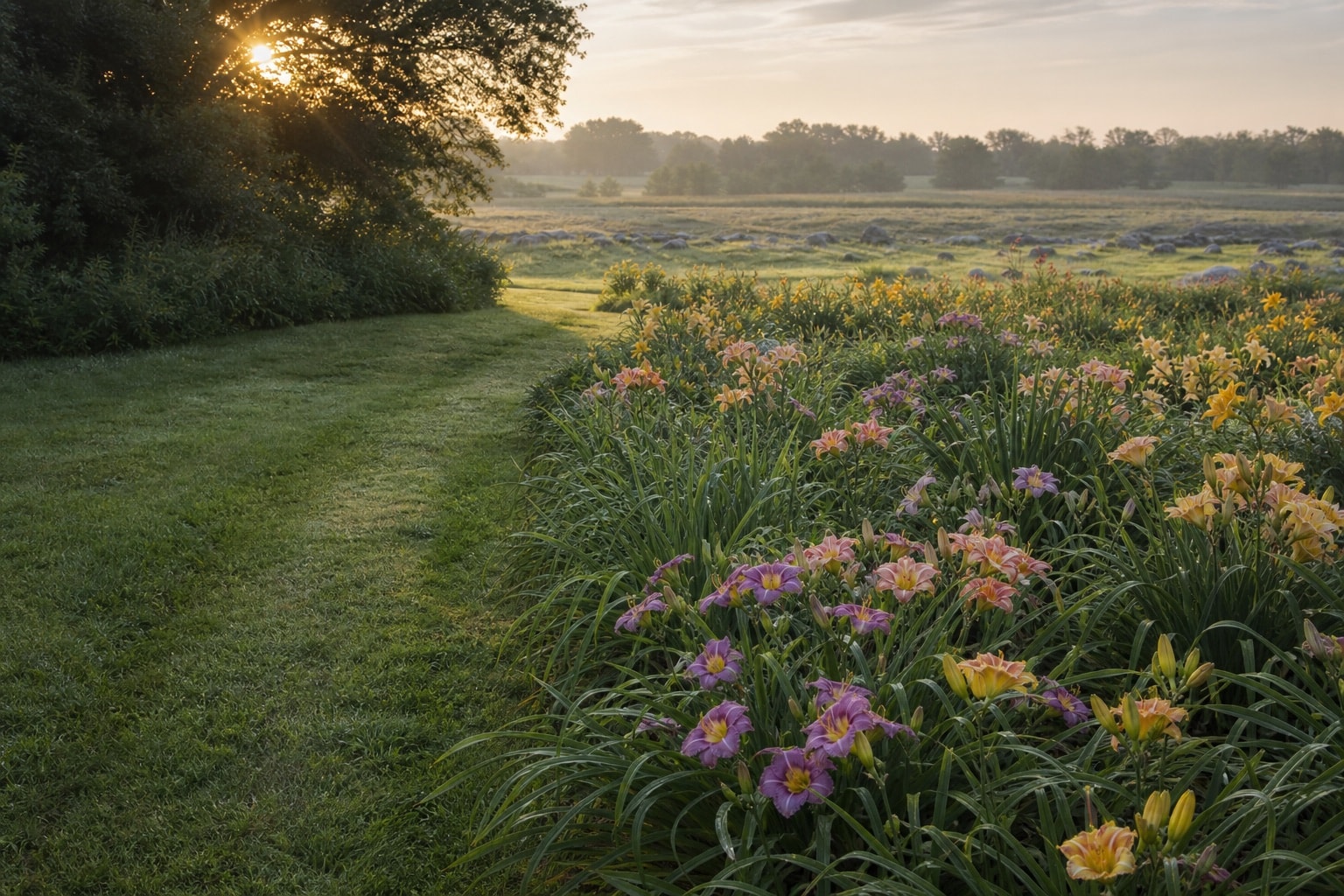
Bluegrass Daylily Garden Notes is an independent horticultural reference for people who want to understand Hemerocallis as a garden plant. It is not a nursery, catalog, sales outlet, or representative of any grower. The goal is simple: to offer current, careful guidance on choosing plants, preparing a bed, watching bloom, and keeping a collection healthy.
A daylily looks effortless in flower, but the best clumps are the product of several quiet decisions. Sun exposure influences bloom. Soil structure determines whether crowns stay healthy. Spacing affects air movement and how soon a clump needs division. Cultivar traits such as scape height, bloom season, branching, and foliage habit decide whether a plant fits a particular border. Good gardening begins by noticing those relationships instead of relying on a single label or photograph.
Start with the plant, not the promise
Daylilies are clump-forming herbaceous perennials, not true lilies. Each bloom is brief, while an established scape may carry many buds that open in sequence. This distinction helps explain why bud count and branching can matter as much as the appearance of one flower. A clear botanical overview is available in this university plant profile, which also covers light, soil, propagation, and landscape use.
Before planting, look at the entire garden. Mark the hours of direct light. Watch where water lingers after rain. Notice which neighboring plants emerge early, which cast summer shade, and which require frequent disturbance. Then choose daylilies for those conditions. A plant selected for its role in the border is more likely to remain useful after the first flush of excitement passes.
A practical route through these notes
New growers can begin with daylily basics, then move to planting and soil preparation. Established beds benefit from the seasonal care calendar and the step-by-step guide to dividing crowded clumps. Gardeners planning a new border can compare cultivar traits, build a long display with the bloom-season notebook, and use the design guide to place foliage and flowers with intention.
Separate recurring work from major work
A gardener’s year contains two different kinds of work. Observation, deadheading, label checks, and brief record entries are light, repeatable tasks that fit naturally between other routines. Lifting, division, and reworking a bed are occasional heavy jobs that need clear space, prepared materials, and enough time to finish one section cleanly. Confusing the two can turn a useful seasonal list into an unworkable weekend plan.
Mark each planned task as recurring or occasional before growth begins. Let recurring notes reveal which larger jobs are actually needed, then schedule those jobs separately. The guide to lifting and resetting established clumps shows how much preparation one such task requires. A simple distinction in the notebook protects time for close observation while keeping bed changes deliberate, limited, and easier to document.
The notebook method
A useful daylily record does not have to be elaborate. Note the date the first flower opens, the height of the scapes, the number of visible branches, and whether the foliage stays attractive after bloom. Photograph the whole clump from the same position each year. Record unusually wet or dry seasons. Over time, these observations reveal which plants are dependable in your actual conditions and which merely had a good week.
The garden records page offers a compact system for labels, maps, and seasonal notes. When something looks wrong, use the observation-first process in problem solving: check weather, moisture, roots, crown, leaves, and nearby plants before choosing a response. That sequence prevents many unnecessary treatments.
A garden is more than a list
Collections are rewarding, but a satisfying border also needs rhythm. Repeat colors. Allow fine foliage to contrast with broader leaves. Leave access for division. Mix bloom periods so a brief flower is part of a longer composition. Most of all, keep the garden legible enough that individual plants can be observed. Daylilies reward attention, and the aim of this reference is to make that attention easier.
These pages are educational and independent. They contain no inventory, prices, ordering instructions, visitor hours, or contact channel. For research beyond this site, the resource room points to public gardens, university extension material, and plant-health references that help gardeners make evidence-based decisions.
Return to the same clumps often. A garden viewed only at peak bloom tells an incomplete story; spring emergence, post-bloom foliage, autumn decline, and winter drainage are equally valuable observations. The most enduring skill is not collecting more facts but learning what to notice next.